

A Beginner's Guide to Scalable Business Accounting
 Robert Gauvreau, FCPA, FCA, LPA : Sep 29, 2026
Learn how to build a scalable accounting function for your growing Canadian business, from cloud bookkeeping to Fractional CFO support.
9 min read
 Robert Gauvreau, FCPA, FCA, LPA
Sep 29, 2026
Robert Gauvreau, FCPA, FCA, LPA
Sep 29, 2026
Your revenue is up. Your team is growing. You closed a strong quarter. And yet, somewhere behind all of that momentum, your financial setup is quietly falling behind the pace of your business.
This is not a failure of effort. It is a structural mismatch. The accounting model most businesses inherit was designed for compliance, not for growth-stage decision-making. As your operations scale, that gap between what your finances tell you and what you actually need to know gets wider and more expensive. Gauvreau Accounting Tax Law Advisory builds integrated business accounting services designed to close that gap for entrepreneurs.
This guide walks through the specific accounting challenges that surface as businesses scale, why they happen at a structural level, and what a properly built financial infrastructure looks like on the other side.
Accounting breaks down during growth because the original system was never built for the demands that come with it. A bookkeeper who managed your receipts at $500K in revenue is not equipped to handle multi-entity consolidation, real-time cash flow analysis, or proactive tax positioning at $1M+.
The issue is structural. Most small businesses start with a compliance-first model: record transactions, reconcile accounts, file returns. That model works fine when decisions are simple. But as your team grows, your expenses multiply, and your tax obligations become layered, the compliance model cannot keep up.
The result is a pattern that nearly every growth-stage entrepreneur recognizes. Reports arrive late. Numbers don't fully reconcile. Decisions get made on incomplete information. Not because anyone is doing their job poorly, but because the system itself was not designed for this level of complexity.
Financial Fragmentation is the condition where your bookkeeping, tax planning, accounting, and advisory services all operate independently, with no shared data and no connected strategy. Each function does its own work. None of them talks to the others.
For a scaling business, this creates a compounding problem. Your bookkeeper records transactions without knowing your tax strategy. Your tax advisor plans around year-end numbers without seeing your real-time cash position. Your accountant structures your corporation without knowing what your CFO is forecasting.
Every decision made inside one of those silos carries a cost that is invisible to the others. A 2025 study by Dext found that 42 percent of Canadian SMEs said one more cost surge could force them to close, yet 35 percent of business owners still managed their finances without professional support. The gap between the risk and the infrastructure is where the real damage happens.
There are specific, observable signals that your financial infrastructure is no longer matched to the scale of your operations. Recognizing them early is the difference between a proactive transition and a reactive scramble.
If your monthly financial statements arrive 30+ days after the month closes, you are making decisions on stale information. At the growth stage, that delay means the cash position you are looking at may no longer reflect the commitments you have already made.
Can you tell, right now, whether you can afford to hire the next team member? If that answer requires an email to an advisor and weeks of waiting for an answer, your data infrastructure is not built for the speed at which you are operating.
When tax planning happens only at year-end, every tax obligation becomes a surprise. Proactive tax positioning requires up-to-date books, forward-looking projections, and a strategy that adjusts throughout the year. If your current setup only looks backward, it is structurally incapable of doing that.
Transaction recording and financial interpretation are two different capabilities. If the person managing your books can tell you what happened but not what it means for your next decision, you have outgrown a compliance-only setup.
Outsourced accounting gives growing businesses access to a full financial team, including bookkeepers, accountants, and CFOs, without the fixed cost of building that team in-house. This is not about replacing your current bookkeeper. It is about upgrading the entire system that runs behind them.
A properly structured outsourced accounting function integrates your bookkeeping with your tax strategy, your financial reporting, and your advisory needs. The result is a connected data flow where each function informs the others in real time.
For businesses generating $1M to $10M in annual revenue, this model removes a specific bottleneck: the owner as the connector between disconnected financial functions. Instead of forwarding emails between your bookkeeper, your accountant, and your tax advisor, you operate with one integrated team that shares data, context, and objectives.
A Fractional CFO delivers executive-level financial leadership on a part-time or project basis. For most growth-stage businesses, a full-time CFO is neither necessary nor realistic as a cost. A Fractional CFO fills that gap by bringing strategic financial oversight without requiring a permanent C-suite hire.
This means someone is accountable for interpreting your financial data, identifying inefficiencies, forecasting cash flow, and connecting your financial strategy to your operational goals. The Fractional CFO coordinates your bookkeeping team, your CPA, and your tax advisors so that every piece of your financial picture works toward the same outcome.
Gauvreau Accounting Tax Law Advisory's Fractional CFO team brings clarity to financial numbers so you can make calculated, informed business decisions. Rather than reacting to last quarter's numbers, you operate from a position of control with real-time data and a forward-looking plan.
Proactive tax planning means your tax strategy is built before the decisions are made, not after the fiscal year closes. For a scaling business, this distinction is worth real money. Every capital purchase, every new hire, every distribution decision carries a tax consequence, and those consequences compound when they are not planned in advance.
The compliance model treats tax as an obligation you meet once a year. A proactive model treats tax as a variable that is actively managed throughout the year. This requires accurate, up-to-date bookkeeping, a connected advisory function, and someone with the strategic perspective to model scenarios before you commit.
Gauvreau Accounting Tax Law Advisory integrates tax planning directly into its financial infrastructure so that every bookkeeping entry, every financial report, and every advisory conversation carries the tax context you need to make informed decisions.
At the early stage, financial reporting is about knowing whether you are profitable. At the growth stage, it is about knowing where your profit comes from, which expenses are rising faster than revenue, and whether your current trajectory is sustainable.
Accurate financial reporting requires more than correct numbers. It requires timely numbers, presented in a format that supports decision-making. That means monthly reporting with variance analysis, cash flow projections, and key performance indicators tailored to your industry.
When your financial reporting is structurally connected to your bookkeeping and your tax planning, the reports themselves become a decision-making tool. Without that connection, they are a historical document that arrives too late to act on.
Building a financial infrastructure for growth requires intentional design, not incremental patching. Here is how that process works at a structural level.
Every scaling financial system begins with clean, accurate, real-time data. This means cloud-based bookkeeping that is reconciled monthly, integrated with your payment and invoicing tools, and structured so that your chart of accounts reflects the actual dimensions of your business.
Tax planning should not operate as a separate function from your bookkeeping. When your books feed directly into your tax strategy, your advisor can model the impact of decisions in real time instead of retroactively.
A Fractional CFO connects the data layer to the strategic layer. This is where the raw numbers become actionable intelligence: cash flow forecasts, hiring models, profitability analysis by service line or product, and scenario planning for growth decisions.
Your corporate structure has direct implications for your tax position, your liability exposure, and your succession options. A financial system that does not account for structure is incomplete. Integration means your accountant, your tax advisor, and your lawyer are working from the same information.
The Entrepreneur Financial Operating System (EFOS) is a connected framework built by Gauvreau Accounting Tax Law Advisory that integrates your tax structure, financial data, compliance requirements, and strategic planning into one operating platform.
EFOS is built on three pillars. Verified Data Infrastructure ensures your financial records are clean, accurate, and available in real time. Secured Compliance and Protection covers proactive tax planning, regulatory compliance, and risk management. Strategic Clarity and Growth delivers forward-looking advisory and financial leadership.
The distinction between EFOS and a traditional accounting setup is structural. A traditional setup gives you a collection of disconnected services. EFOS gives you a connected system where every function, from bookkeeping to tax to advisory, informs and supports the others.
Cloud-based accounting removes the geographic and timing constraints that limit traditional setups. Your financial data is accessible in real time, from anywhere, and it integrates directly with the tools your business already uses.
For scaling businesses, this means your bookkeeper, your accountant, and your CFO can all access the same data at the same time. No more waiting for files to be sent. No more working from different versions of the same spreadsheet.
Cloud platforms like QuickBooks Online also enable automation of routine tasks: bank feeds, recurring journal entries, invoice reminders, and payment processing. This frees up capacity so that your financial team can focus on interpretation and strategy instead of data entry.
The transition from basic bookkeeping to a full financial system is not about firing your bookkeeper and hiring an entire department. It is about upgrading the infrastructure around your existing financial data.
Start by mapping what you have today. Who handles your bookkeeping? Who files your taxes? Who advises on financial strategy? If those answers are three different people or firms with no shared platform, you are operating in a fragmented model. Take our Financial Operating System Assessment.
The highest-cost gaps in most growth-stage businesses are late reporting, disconnected tax planning, and the absence of a financial leadership function. Addressing these three will produce the most immediate operational improvement.
Replacing one vendor with another does not solve a structural problem. Look for a model where bookkeeping, tax, reporting, and advisory are connected by design. Gauvreau Accounting Tax Law Advisory's approach to integrated financial services is built specifically for entrepreneurs who need every financial function working together.
Succession and estate planning are financial infrastructure decisions, not events that happen at retirement. For a scaling business, the corporate structure you build today directly affects your options five, ten, or twenty years from now.
A connected financial system ensures that your succession planning is informed by your current financial position, your tax obligations, and your growth trajectory. Planning in isolation from these inputs produces strategies that look good on paper but fall apart under real-world conditions.
Starting this process early, when the business is growing, gives you the maximum number of options and the most time to position your corporate structure for a favorable outcome.
The accounting model that got your business to this stage was not designed for the stage you are entering. That is not a criticism. It is a structural reality.
Growth creates complexity. Complexity demands integration. And integration requires a financial system that connects your data, your tax strategy, your compliance obligations, and your advisory support into one operating framework.
The businesses that navigate growth successfully are not the ones working harder on their finances. They are the ones who replaced the inherited compliance model with a system built for the decisions they need to make today. You decide if and when you are ready to start that conversation. No deadline. No pressure. You can book a Financial Review with Gauvreau to see exactly where your current setup stands.
The clearest signal is when your financial reports consistently arrive too late to inform decisions. Businesses approaching $1M in revenue typically reach a complexity level where basic bookkeeping no longer supports operational needs. Outsourced accounting gives you a full financial team connected to your tax and advisory functions.
A bookkeeper records and categorizes financial transactions. A Fractional CFO interprets that data, builds forecasts, identifies inefficiencies, and connects financial strategy to business goals. Gauvreau Accounting Tax Law Advisory's Fractional CFO team coordinates your entire financial function so every decision is backed by accurate, forward-looking data.
Outsourced accounting integrates your bookkeeping with your tax strategy so your advisor can model scenarios in real time. This replaces the year-end scramble with proactive positioning that adjusts throughout the year. Gauvreau Accounting Tax Law Advisory connects tax planning directly into its financial infrastructure for this reason.
The Entrepreneur Financial Operating System (EFOS) is Gauvreau Accounting Tax Law Advisory's connected framework that unifies verified data, compliance, and strategic growth into one platform. It replaces the fragmented model where each function operates independently, giving you real-time data, proactive tax planning, and strategic financial oversight in one system.
Outsourced accounting and Fractional CFO services are designed specifically for businesses that need executive-level financial leadership without the cost of a full-time hire. The investment is structured to match your business's current stage and scales as your needs evolve, making it accessible for businesses generating $1M or more in annual revenue.
Robert Gauvreau, FCPA, FCA, LPA : Sep 29, 2026
Learn how to build a scalable accounting function for your growing Canadian business, from cloud bookkeeping to Fractional CFO support.
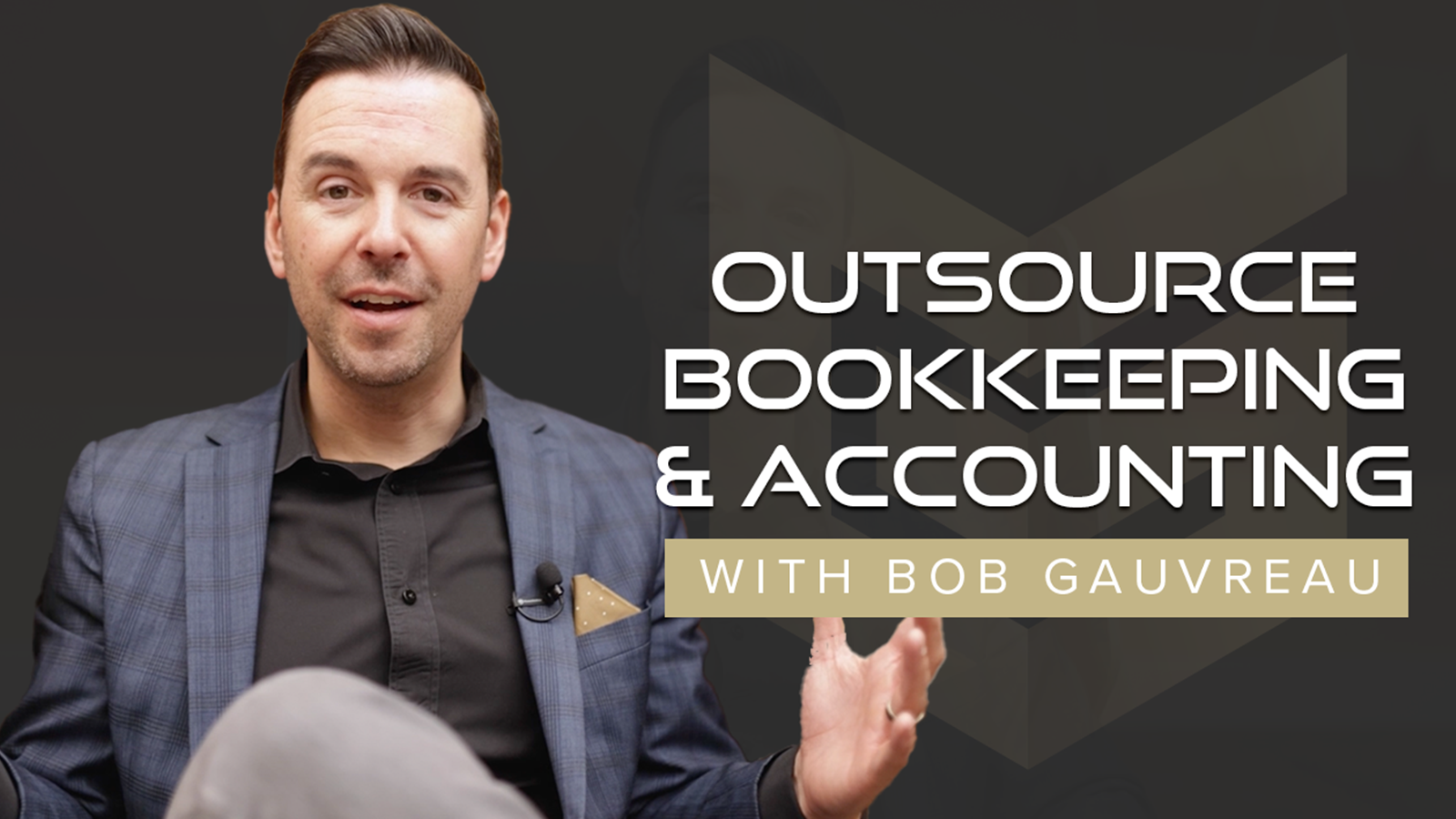
 Gauvreau Accounting Tax Law Advisory : May 19, 2023
Gain expertise, eliminate turnover issues, save time, enhance quality, and focus on scaling your business. Find out why outsourcing should be a...
Robert Gauvreau, FCPA, FCA, LPA : Sep 29, 2026
Behind on your books? Here's what to fix first, what the CRA penalties are, how long catch-up takes, and how to stay current after.